

Preparing for the Oriel foundation trainee pharmacist recruitment cycle takes more than last-minute revision. The process runs across several months each with its own deadline. This guide sets out the 2026 cycle (for July 2027 Foundation Training programme starts) as a clear timeline, then covers the assessments, the administrative tasks and the questions applicants most often ask.
Dates below reflect the published 2026 cycle schedule. Always confirm against the official applicant handbook and your own Oriel account, because regional variations and small adjustments do occur.
The 2026 cycle at a glance
| Stage | Window |
|---|---|
| Applications open | 15 June 2026 |
| Applications close | 3 July 2026 |
| Preferencing opens | 29 July 2026 |
| Assessment booking | 3–14 August 2026 |
| SJT & numeracy testing | 21 September – 1 October 2026 |
| Preferencing closes | 22 October 2026 |
| First-round offers | Early November 2026 |
| Upgrade deadline | Late November 2026 |
| Employer notification | Mid-December 2026 |
| Programmes commence | July/August 2027 |
Application submission
The application portal opens in mid-June and stays live for roughly two to three weeks. During this window you register your Oriel account, complete your personal details, upload your supporting documents and confirm your eligibility and references. Aim to finalise everything before the window opens so you can submit early - there is no need to add additional stress fighting the deadlines!
Preferencing
Preferencing is where you rank the employers and training locations you would accept, in genuine order of preference. It opens at the end of July and stays open until late October, so you have time to research thoroughly before committing your final list.
The allocation algorithm places you in the highest-ranked post that still has a vacancy when your turn arrives in the ranked candidate list. Because of this, ranking a competitive post highly is not a gamble: if your assessment results rank you highly enough to secure it, you will. The right strategy is therefore to rank as many places as possible in the order of your interest. If you’re going to preference competitive placements, such as large teaching hospitals in major cities, we recommend ranking them as highly as possible.
Assessment booking
The booking window runs in early-to-mid August. Once it opens, log in to choose a date and location for your assessment session at a Pearson VUE test centre. Popular centres (London or other city centres) and convenient slots fill quickly, so book as soon as the window opens rather than waiting.
Assessment window: SJT and numeracy
Testing takes place across late September and early October. You sit both assessments in a single appointment at a Pearson VUE centre, completing the numeracy test first and the SJT immediately afterwards.
- Numeracy Test — 10 numeracy/calculation questions in 20 minutes. Answers are entered as numbers only.
- Situational Judgement Test (SJT) — 52 non-clinical scenarios in 104 minutes, each asking what you should do as a foundation trainee pharmacist - not a registered pharmacist.
Results and offers
First-round offers are released in early November, with an upgrade deadline later in the month for candidates who want to be considered for a higher-preferenced post that becomes available. Employers are notified in mid-December. When you receive an offer, respond within the stated window — an offer left unanswered can lapse.
Planning your timeline
- April–May 2026: Go through the available employers and training providers. Secure and brief your referees, and gather certified copies of any documents you will need to upload. Get a calculator if you need one (see the list below).
- June (applications): Submit early in the window. Verify your uploads and check the completeness indicators.
- Late July–October (preferencing): Build and refine your preference list while it is open. Contact shortlisted employers if you need more information.
- August (booking): Watch your email and book your preferred slot the moment the window opens.
- September/October (assessments): Run timed, full-length practice sessions under realistic conditions for both the SJT and numeracy.
- November–December (results & offers): Respond promptly to your offer and begin preparing for pre-employment checks and induction scheduling.
Administrative considerations
-
Photographic ID: Bring the forms of identification specified by Pearson VUE for your appointment (Passport).
-
An approved calculator: Only certain basic models are permitted, so check yours against the Pearson VUE list before test day. The currently accepted models are:
- Aurora DT210
- Aurora HC133
- Casio SL-300SV
- Casio HS-8VA
- Casio MX-8S-WE* (also known as MX-8S*)
- Casio MX-8B-WE* / MX-8B*
- Catiga CD-8185
- Casio MS-80F
- Casio SL-460L-W
- Lexibook C208
Models marked with an asterisk (*) have been discontinued by the manufacturer but are still accepted in the assessment. Turning up with a non-approved calculator can leave you sitting the numeracy test without one.
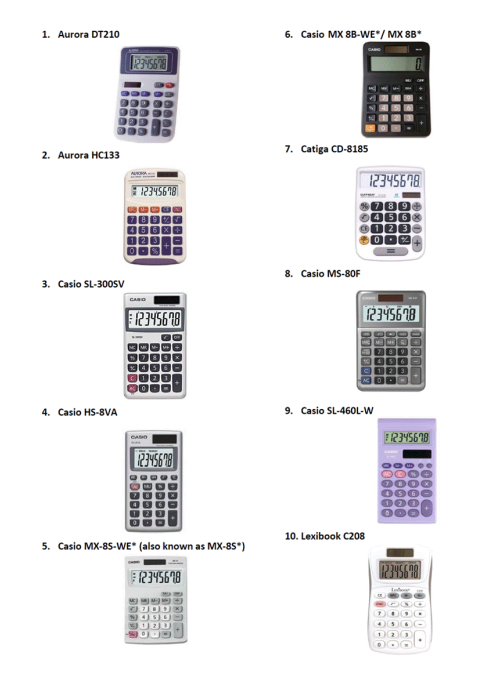
Source: Foundation Trainee Pharmacist Recruitment Applicant Handbook — Commencing 2027 (England & Wales).
-
Reasonable adjustments: If you need extra time, rest breaks or other accommodations, request them through Oriel well before the booking window.
-
Registration and eligibility: Keep any required registrations active throughout the process, and make sure your eligibility evidence is current.
Study and preparation tips
- Start the SJT early. Begin scenario practice months in advance and ground it in the GPhC standards for pharmacy professionals and the NHS values that underpin them. Understanding the principles and rationale beats memorising answers.
- Practice numeracy daily. Short, regular sessions on dose calculations, infusion rates, unit conversions and concentrations build the fluency that prevents careless errors under time pressure. These numeracy questions are easier than the ones you usually get from university calculation exams.
- Always time your practice. Ten questions in twenty minutes leaves little room for hesitation — rehearse the pace, not just the method.
- Review every mistake. Note whether each error was knowledge, misreading or time pressure, and target your revision at the recurring patterns.
Sharpen the numeracy and SJT with timed practice and fully worked solutions. See our comprehensive Oriel preparation plans to build accuracy and speed before test day.
Frequently asked questions
What is Oriel and why is it used for pharmacy foundation training?
Oriel is the NHS online recruitment platform used to manage applications for a range of healthcare training programmes, including foundation trainee pharmacist recruitment. It centralises the process so you submit one application that can be considered across multiple training providers, rather than applying to each employer individually. It also handles the scheduling and results of the SJT and numeracy assessments, and stores your supporting documents and references. Because the platform underpins the whole cycle, it is worth getting comfortable with it well before the application window opens.
What are the key stages, and in what order do they occur?
The recruitment cycle begins when the application window opens, at which point you complete the online form and submit any required supporting documents. Eligible candidates are then invited to sit the SJT and numeracy assessments. Your SJT performance determines your overall Oriel ranking, while the numeracy assessment may be used as a tie-breaker where candidates have the same SJT score. You then rank your preferred employers or locations, and posts are allocated by matching candidates, in rank order, to their highest available preference. Offers are issued through Oriel, and you are given a specified period in which to accept or decline. Each stage has a strict deadline, and missing one may result in your application being withdrawn.
How should I prepare for the SJT and numeracy assessments, and how long should I allow?
For the SJT, start with a genuine understanding of the GPhC standards and NHS values, then work through practice scenarios to build the habit of reasoning systematically rather than reacting on instinct. For numeracy, drill pharmaceutical calculations — doses, infusion rates, unit conversions and concentrations — to the point of fluency, always under realistic timed conditions. Most candidates benefit from beginning structured preparation at least six to eight weeks before their assessment date, with consistent daily practice in the final weeks rather than last-minute cramming. Try pillthegap's Oriel preparation plans.
What happens if I miss a deadline?
The process runs to strict deadlines, and the consequences are significant. Missing the application deadline usually means exclusion from that round, as late applications are not accepted. Missing the assessment window, or failing to respond to an offer in time, can similarly remove you at that stage. The platform sends automated reminders, but these can be missed, so actively monitoring your account and email is essential. If you miss a deadline due to genuinely exceptional circumstances such as serious illness or bereavement, contact the relevant helpdesk promptly with evidence — discretionary consideration may be possible, though it is never guaranteed.
What should I consider when preferencing my posts?
Preference thoughtfully, because it is one of the most consequential decisions in the cycle. Since allocation places you in your highest-ranked post that still has a vacancy when your turn comes, ranking a competitive post highly is not inherently risky. Focus on the factors that matter to your training year: the type of setting (community, hospital or a combination), the location and its practical implications, the support structures and reputation of the provider, the breadth of clinical experience and the scope for specialist rotations. Speaking to pharmacists already at your shortlisted organisations and attending open days will give you a far more informed basis than general reputation alone.